Sexual encounters between Neanderthals and historic people skewed in a single route—principally between male Neanderthals and feminine people.
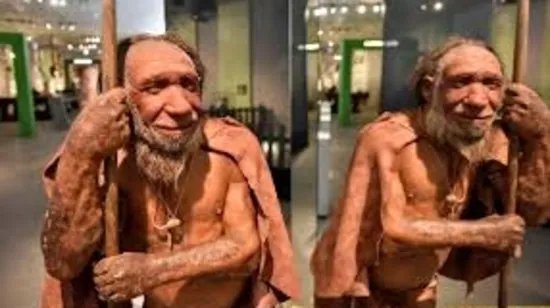
A contemporary reconstruction of a Neanderthal. Martin Meissner/AP
Scientists have lengthy recognized that Homo sapiens interbred with Neanderthals, who thrived throughout Europe and western Asia between about 400,000 and 40,000 years in the past earlier than going extinct. Now, new analysis reveals that these matings had a robust pair-up sample.
“It’s a extremely fascinating, provocative speculation that there was this long-term mating choice,” stated Joshua Akey, a Princeton College geneticist who wasn’t concerned within the work.
DNA extracted from ancient bones and teeth has beforehand proven the genes from our extinct cousins reside on in many present-day humans. These genes play a job in our sleeping habits and our susceptibility to sure ailments, together with Covid.
A trio of College of Pennsylvania researchers dug deeper into these historic pairings and revealed their findings Thursday in a brand newstudy in the journal Science.
They in contrast DNA from 73 fashionable ladies in Africa to genetic data from three feminine Neanderthals. The group discovered the Neanderthals’ X chromosomes had 62% extra fashionable human DNA than the remainder of their chromosomes.
This reveals a sample in historic sexual pairings, stated Alexander Platt, an evolutionary geneticist on the College of Pennsylvania and examine co-author.
A male—who has an X and a Y chromosome—can cross on just one copy of the X chromosome, in contrast with a feminine with two X chromosomes.
If fashionable human females and Neanderthal males mated extra, which means fewer X chromosomes from Neanderthals entered the human gene pool—and extra X chromosomes from fashionable people received handed onto Neanderthals, stated Daniel Harris, one other examine co-author.
The 2 species doubtless mingled in a number of waves of interbreeding: one about 250,000 years in the past and one other about 45,000 years in the past, in response to Platt. The mating preferences his group famous remained constant.
For Akey, the work demonstrates the ability of historic DNA as a analysis device.
“Utilizing genome sequences to have the ability to infer one thing in regards to the social dynamics of interactions that occurred tens or a whole lot of hundreds of years in the past is fairly superb,” he stated.
Write to Aylin Woodward at aylin.woodward@wsj.com