Insurance coverage That Coated Terror, Not Battle, Leaves Corporations Dashing for Cowl

The battle with Iran is triggering a surge in demand for warfare insurance coverage within the Center East, whereas sparking fights over rising premiums and what’s coated by present insurance policies.
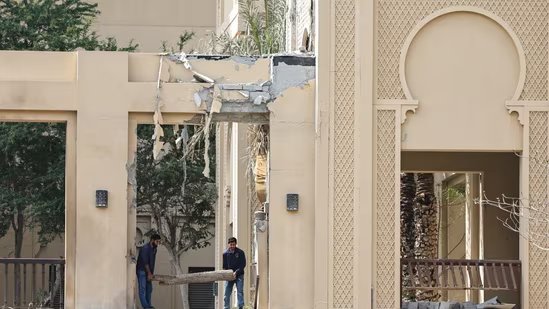
Particles is cleared from the broken Fairmont the Palm lodge in Dubai early within the warfare.
Customary business insurance policies, comparable to property, cyber and business-interruption insurance coverage, usually don’t embrace war-related injury. Meaning corporations now must pay more and more steep charges to get safety in opposition to threats comparable to missile strikes.
Because the warfare enters its second month, there’s a lot at stake for insurers and common companies throughout the Center East: Losses for buildings, infrastructure and ships might run into the billions of {dollars} if the battle drags on.
Corporations are dashing to take out new warfare protection. “Most insurers have seen effectively over 300 new submissions in the previous few weeks,” stated Fergus Critchley, world head of terrorism and political violence at dealer WTW.
Battle-risk cowl for actual property within the Persian Gulf now usually prices 6% to eight% of a property’s worth, in contrast with effectively underneath 1% in peacetime, based on Sachin Sahni, an insurance coverage analyst at S&P World Scores.
“Shopping for warfare danger cowl has turn into actually costly,” Sahni stated. “It’s nonetheless potential to get in the event that they’re able to pay the worth, however it’s very tightly managed.”
The scramble comes after many companies within the Gulf dropped war-risk cowl in recent times to scale back their premiums, brokers stated, trusting the region’s reputation as a haven from political turmoil.
For instance, the Fairmont the Palm lodge in Dubai that was set ablaze early within the warfare was insured in opposition to terrorism and sabotage, based on individuals aware of the matter. However the luxurious lodge didn’t pay the extra premium for a so-called political violence coverage, which explicitly covers warfare losses, the individuals stated.
Whereas claims are beginning to trickle in, brokers and analysts say it’s too early to gauge general losses stemming from the battle—not least due to the problem of getting surveyors to evaluate injury in a warfare zone.
Thus far, monetary ache for insurance coverage has been restricted. Losses from political-violence insurance policies, together with missile injury to power terminals, possible run into the tons of of tens of millions of {dollars}, based on Brian Schneider, an insurance coverage analyst at Fitch Scores.
Rising charges have been a flashpoint. Some insurers not too long ago withdrew from a bunch offering cowl for Emirates’ fleet of plane after the airline balked at a a lot greater premium due to the warfare, based on individuals aware of the negotiations.
Aviation insurers can usually reprice insurance policies after a warfare breaks out. Iran has targeted Dubai International Airport, the place Emirates relies, damaging not less than considered one of its planes, individuals aware of the incident stated. The jet solely required beauty touch-ups and the service hasn’t filed a declare, they stated.
Emirates’ dealer pushed again on the requested charge rise, saying the potential for a battle was already baked into present agreements, the individuals aware of the negotiations stated. The stalemate was damaged when the lead underwriter agreed to persevering with masking the airline for a extra modest improve in its premium, they stated.
With insurers leaning on exclusions to restrict payouts, much more fights are forecast.
Marine insurance coverage is a sizzling spot for possible conflicts. The efficient closure of the Strait of Hormuz has left round 1,000 ships stranded. Ships can get insured to undergo the strait—at steep prices—however most are selecting to not due to safety issues.
Greater than 20 ships have been hit, or suffered close to misses, for the reason that battle started, based on Lloyd’s Checklist, a marine-data supplier.
Lengthy cargo delays and injury to ships are anticipated to set off claims—and fights over what’s coated by present insurance policies. Some claims might take years to get resolved, legal professionals stated.
“This may possible trigger a wave of litigation,” stated Raymond Waid, a New Orleans-based maritime lawyer. “The longer this goes on, the extra circumstances there will probably be.”
Sanctions add one other layer of complication, legal professionals stated. A few of the few ships which might be traversing the Strait of Hormuz are a part of the so-called shadow fleet of vessels flouting sanctions on oil.
Marine war-risk insurance coverage insurance policies usually have sanctions exclusions, legal professionals stated. Insurers are legally barred from paying claims linked to sanctioned people or corporations.
However strikes to increase sanctions imply some vessels that have been legally underwritten would possibly now be banned from payouts.
“It’s a minefield for insurers,” stated Jonathan Moss, head of the London workplace for legislation agency DWF. “In the event that they pay a declare, and even examine it, and the vessel is linked to sanctioned entities, they might face very critical penalties.”
Repercussions from the battle are spreading past the Gulf. Outdoors of the area, there was an increase in demand for terrorism insurance coverage from large multinationals, based on James Bannister, head of world warfare and terrorism at dealer Lockton.
“They’re involved the Center East tensions might result in extra extremist cell exercise in Western nations,” Bannister stated.
Write to Jean Eaglesham at Jean.Eaglesham@wsj.com and Benjamin Katz at ben.katz@wsj.com